Slot machines are one of the most popular games at casinos, but many people don’t understand what happens when they press the spin button. Slot machines use a computer program called a random number generator (RNG) to determine the outcome of each spin, making every result completely random and independent from previous spins. This means there’s no pattern to predict and no way to know when a machine will pay out.
The basic idea is simple. You place a bet, spin the reels, and hope matching symbols line up on a payline. When they do, you win money based on which symbols matched and how much you bet. The amount you can win depends on the game’s payout table.
Understanding how slots actually work can help you make better choices about which games to play and how to manage your money. You’ll learn about the technology behind the reels, the different types of machines you might encounter, and what really determines your chances of winning.
How Slot Machines Work
Slot machines operate through a combination of random number generation technology, physical or digital reels, and predetermined payout structures. The outcome of each spin is determined the instant you press the button, with symbols landing on paylines to create winning combinations.
Random Number Generators
Every modern slot machine uses a Random Number Generator (RNG) to determine the outcome of each spin. The RNG is a computer chip that generates thousands of number sequences every second, even when the machine isn’t being played.
When you press the spin button, the RNG stops at a specific number sequence. This sequence corresponds to specific positions on the reels. The moment you hit that button determines your result, not when the reels stop spinning.
The RNG ensures that each spin is completely independent from the previous one. Your chances of winning stay the same on every spin, regardless of past results or how long you’ve been playing.
Casino regulators test and verify RNGs to ensure they produce truly random results. This testing confirms that slot machines operate fairly and that outcomes cannot be predicted or manipulated.
Reels and Paylines
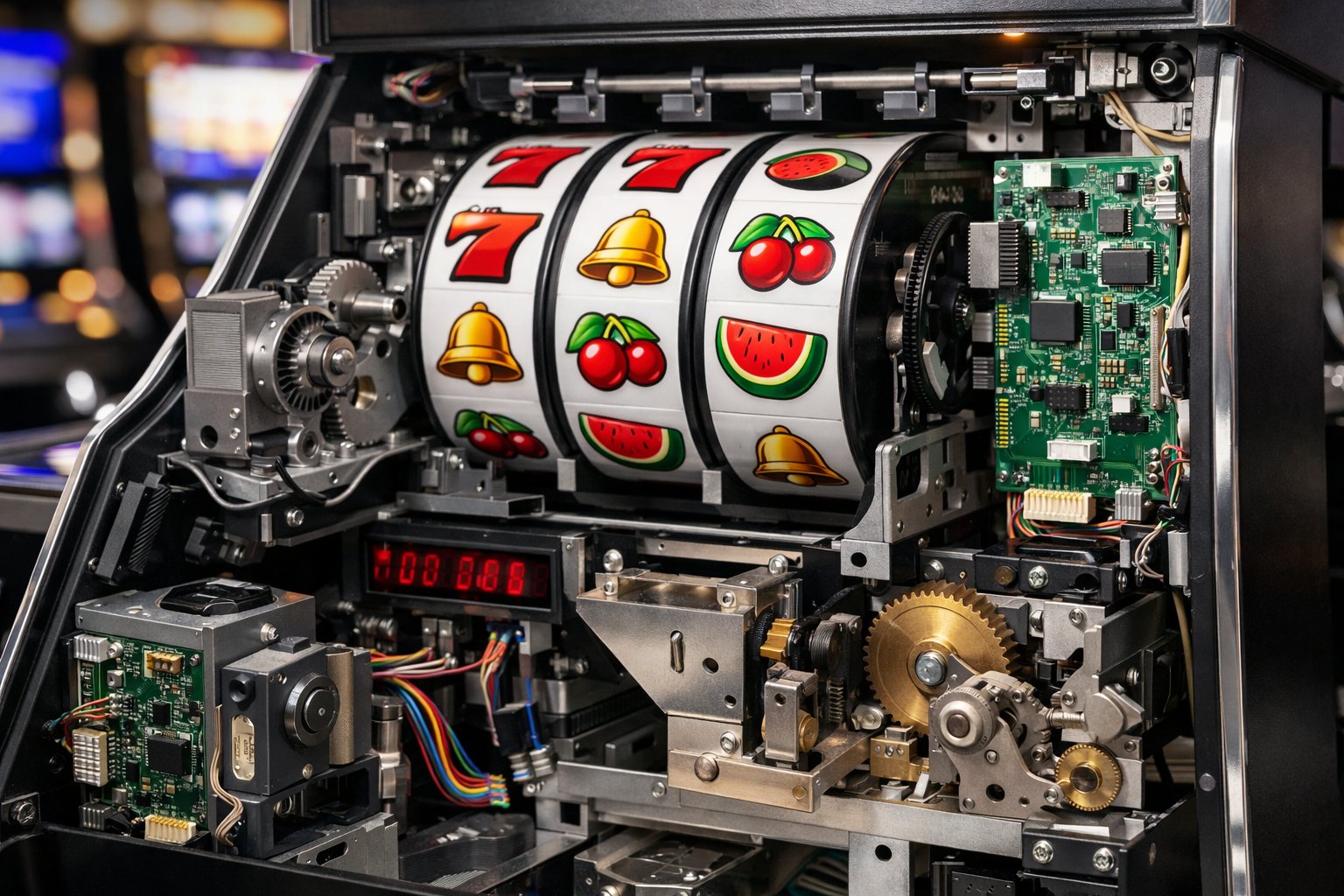
Slot machines feature reels that spin vertically when you place a bet. Traditional slots had three mechanical reels, while modern slots typically display five video reels on a screen.
Paylines are the patterns across the reels where matching symbols must land to create a win. Classic slots might have just one payline running horizontally across the middle. Modern video slots can have 20, 50, or even 100+ paylines running in various directions.
You can usually choose how many paylines to activate on each spin. Betting on more paylines increases your total wager but gives you more chances to win on a single spin.
Symbols and Winning Combinations
Each reel contains different symbols that determine whether you win or lose. Standard symbols include themed icons, numbers, letters, and special symbols like wilds and scatters.
Wild symbols substitute for other symbols to help create winning combinations. Scatter symbols typically trigger bonus features or free spins when you land a certain number anywhere on the reels.
To win, you need to land matching symbols on an active payline. Most slots require symbols to line up from left to right, starting with the leftmost reel. The number of matching symbols and their value determine your payout amount.
The paytable shows you the value of each symbol and what combinations pay out. Higher-value symbols require fewer matches to win, while lower-value symbols need more to create a payout.
Types of Slot Machines
Slot machines come in different formats that affect how you play and win. Classic slots offer simple gameplay with fewer reels, while video slots provide more features and bonus rounds, and progressive jackpot slots link multiple machines to create massive prize pools.
Classic vs Video Slots
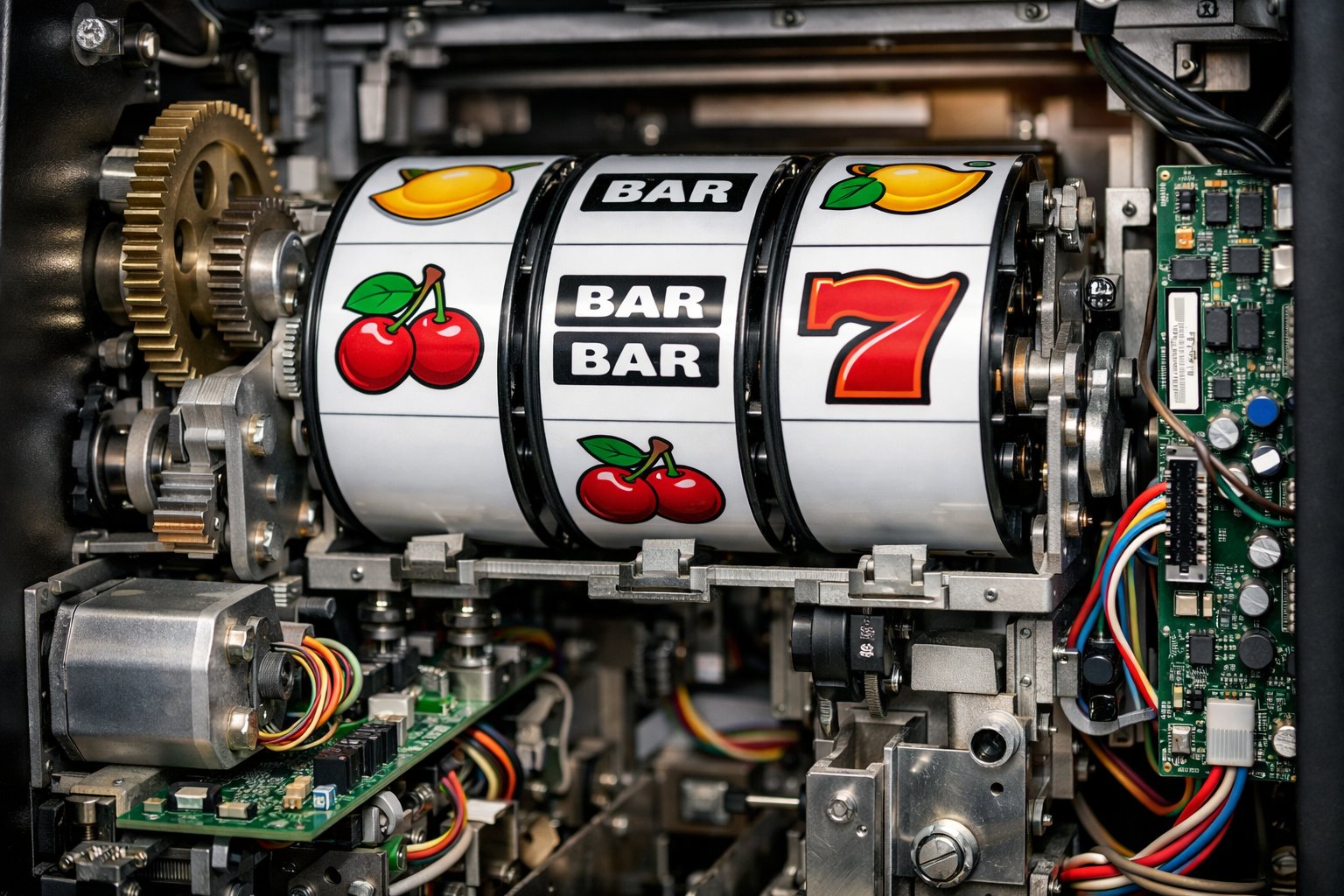
Classic slots typically have three reels and a limited number of paylines. These machines feature traditional symbols like fruits, bars, and sevens. You’ll find straightforward gameplay with no complicated bonus features or animations.
The betting options are usually basic, and wins come from matching symbols across a single payline or a few paylines at most. Many players enjoy classic slots because they’re easy to understand and play quickly.
Video slots use computer screens instead of physical reels and typically feature five reels or more. You get access to multiple paylines, sometimes reaching 25, 50, or even 243 ways to win. These games include bonus rounds, free spins, wild symbols, and scatter symbols.
The graphics and animations are more advanced, often following specific themes like movies, TV shows, or fantasy worlds. Video slots offer more variety in how you can win, but they require more attention to understand all the features.
Progressive Jackpot Slots
Progressive jackpot slots connect multiple machines together through a network. A small portion of each bet you make goes into a shared jackpot pool. This jackpot grows continuously until someone hits the winning combination.
The prize amounts can reach millions of dollars because players across different casinos contribute to the same pool. You’ll see the current jackpot amount displayed on the machine, updating in real-time as it increases.
These slots usually require you to bet the maximum amount to qualify for the progressive jackpot. The base game pays out like regular slots, but the progressive jackpot is a separate prize on top of normal wins. Your odds of hitting the progressive jackpot are typically very low compared to regular slot wins.